I was chair of the Kent Arts Commission in 1979 when the King County Arts Commission sponsored a symposium called “Earthworks: Land Reclamation as Sculpture.” It was organized by the KCAC in cooperation with the National Endowment for the Arts and the Bureau of Mines as a way to reclaim environmentally damaged lands, mostly gravel pits, and turn them into welcoming public spaces.
Kent’s Mayor, Isabel Hogan, had a problem. The city was about to lose its insurance because increased runoff from development on East Hill created a situation in Mill Creek that threatened to flood the new senior citizen center, the medical center, the junior high, and numerous businesses. A dam was to be built at the mouth of the canyon to make a retention pond to control the waters of a 100-year flood. Mayor Hogan asked the symposium panelists to reconvene and recommend an artist who could add aesthetic touches to make the basin an inviting space rather than a visual barrier at the entrance of the 107-acre Mill Creek Park.
The panel recommended Herbert Bayer, a Bauhaus artist, who had been named an enemy of the state by Hitler and had left Germany in 1938. Since 1966, he was ARCO’s corporate artist, had designed the Aspen Design Institute, and created one of the installations on the Friendship Route for the Olympic Games in Mexico City. Now he agreed to design a flood control sculpture park for the City of Kent. Mayor Hogan asked the arts commission I chaired to raise the $95,000 for the sculptural enhancements.
I started with the usual funding sources, the Washington State and King County Arts commissions, and the NEA. They all came through with grants. At one meeting with King County, the commission’s executive director asked where else I planned to look. I pointed out that the flood control aspect of the project should qualify us for a block grant.
He immediately made a call to the county department of Housing and Community Development, and I trotted over to that office. Fortunately, the person I met there had grown up in Kent beside the canyon and could remember times when Mill Creek was so jam-packed with salmon that “you could not wade across without stepping on one.” The salmon runs had died off because of downstream pollution, and a particular suspect was a chemical recycling plant that had recently been designated by the EPA as a Superfund site. Cleanup was slated to begin in the near future.
Bayer’s design maquette, a small, preliminary model, was turned over to the Kent Arts Commission and promptly loaned to the NEA for a traveling exhibition for the next two years. So, in making presentations to various organizations that might provide funding, I had to rely on slides and verbal descriptions. During one presentation, some technical questions about water volume and capacity of the holding area arose. I replied that I was only raising money for the sculptural elements and that those questions should be directed to someone in the engineering department. The assembled group burst into laughter. I learned later that the questioner was one of the city engineers. Oops, public humiliation is not the way to make friends.
The arts commission had no staff at that time and no stable annual budget. However, the local police chief did donate each stipend received from the Defense Department for returning drunken servicemen to their respective bases. I toyed with the idea of recommending that we Art Commissioners encourage this generosity as a fundraising tactic, but the drive to Fort Lewis and McChord Air Force Base to get carloads of servicemen, bring them back to Kent, ply them with strong drink, blow the whistle, and wait for the stipend to work its way through the system was just too cumbersome.
After getting money from the governmental arts organizations, I began to look to foundations, and then the unlikely alliances I had learned to watch for. The city was looking into initiating a recycling program, and a citizen committee was being formed. I volunteered. It turned out that I was not the only member who could tell the difference between garbage and art. The garbage company anted up a significant amount, as did the local distributor of strong drink.
Within three months, I had raised $93,000 and only needed $2,000 more. Then the city council realized that someone was out raising money in the name of the City of Kent, and that person was beyond their control and could not be fired. All I could do was promise that if I was going to the federal prison on McNeil Island for misuse of government funds, I would take them all with me.
Instead, the Arts Commission was made part of the Parks Department, a staff person was assigned (one who could be blamed if things went awry), and shortly thereafter, an annual arts budget was approved. At the same time, the estimated cost rose to $145,000, but I was off the hook.
Once we had a staff member, I was free to think of other things. I was teaching sixth grade at Scenic Hill Elementary, located across the street from Upper Mill Creek Canyon. My attention turned to the preservation of the Earthworks and teaching kids to respect the park. I contacted the ecology instructor at Green River Community College, the Green River Fishery, and the Kent Senior Center, and initiated a salmon planting program. We arranged for a van service to bring senior volunteers to the school to help students load planting tubes — pea gravel layered with salmon eggs from the hatchery — to plant in Mill Creek. When the tubes were retrieved from the creek, very few eggs remained, indicating a successful hatch.
Green River provided lab equipment and volunteers to help the kids take weekly water samples and linked our results to the Puget Sound water quality monitoring site. The next year, the City of Kent purchased large aquariums for in-room salmon rearing for my school and two others.
I was proud of my efforts, but didn’t really appreciate the significance of the Herbert Bayer Mill Creek Earthworks until two years after its dedication. I was at the Design Center in London and saw a large coffee table book on display. It was propped open to the page showing Bayer’s original maquette. Yes, I bought the book.
In April 2008, the Mill Creek Earthworks Park was given the designation as Kent’s first landmark by the King County Heritage Commission. The only alteration to the park has been to raise the berm to contain a 10,000-year flood and increase the height of the sculpted mound on the berm.
For more information, look up Mill Creek Canyon Earthworks in Kent at historylink.org.
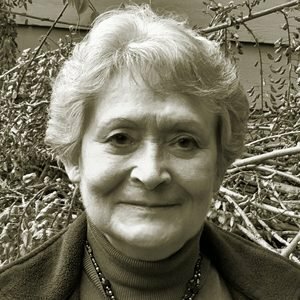
Award-winning columnist Carolyn Wiley lives quietly, for the most part, in Longbranch.


UNDERWRITTEN BY THE FUND FOR NONPROFIT NEWS (NEWSMATCH) AT THE MIAMI FOUNDATION, THE ANGEL GUILD, ADVERTISERS, DONORS AND PEOPLE WHO SUPPORT INDEPENDENT, NONPROFIT LOCAL NEWS